Home › 3rd grade › Spanish Language Arts › Spanish Verb Tenses Past Present Future Test
Spanish Verb Tenses Past Present Future Test
Ayer, hoy y mañana
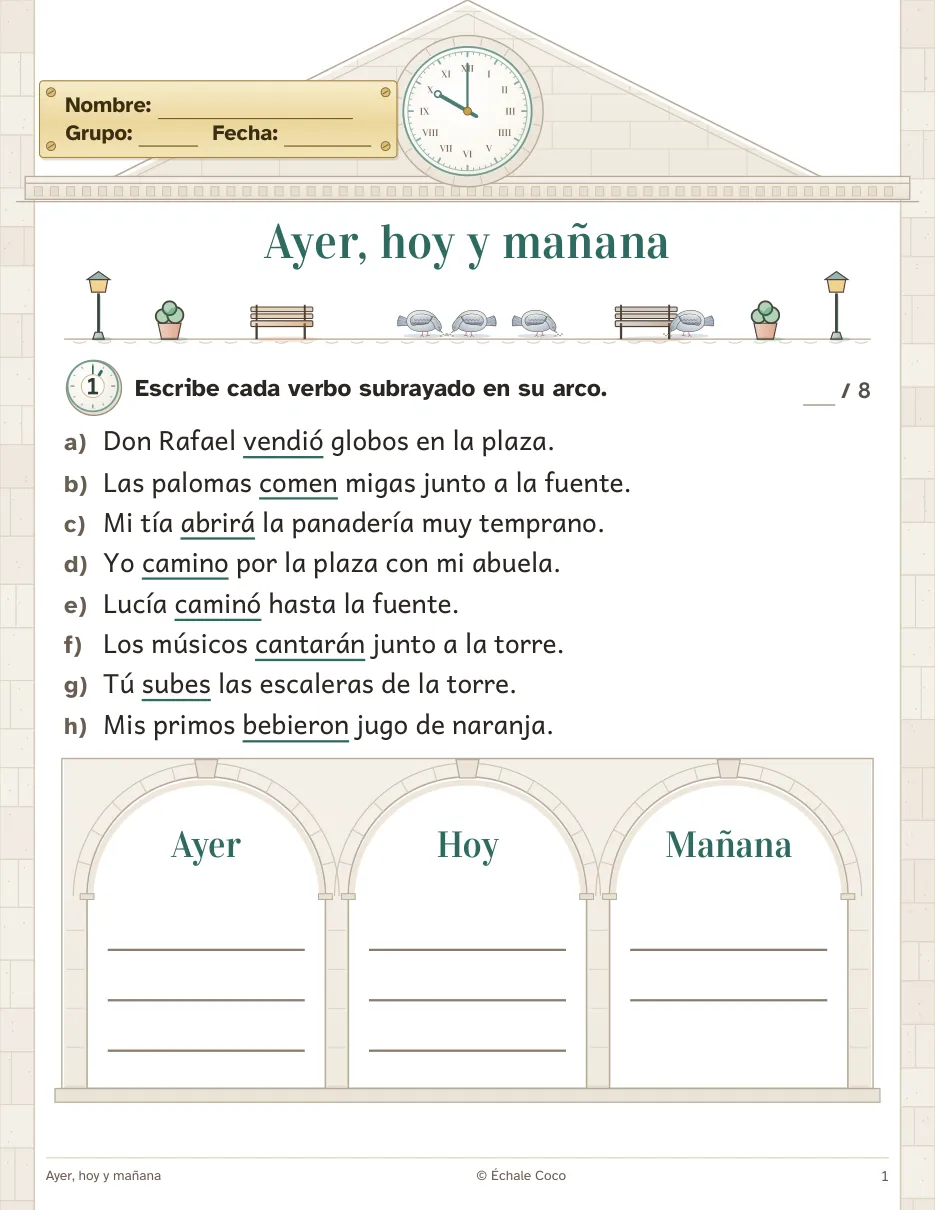
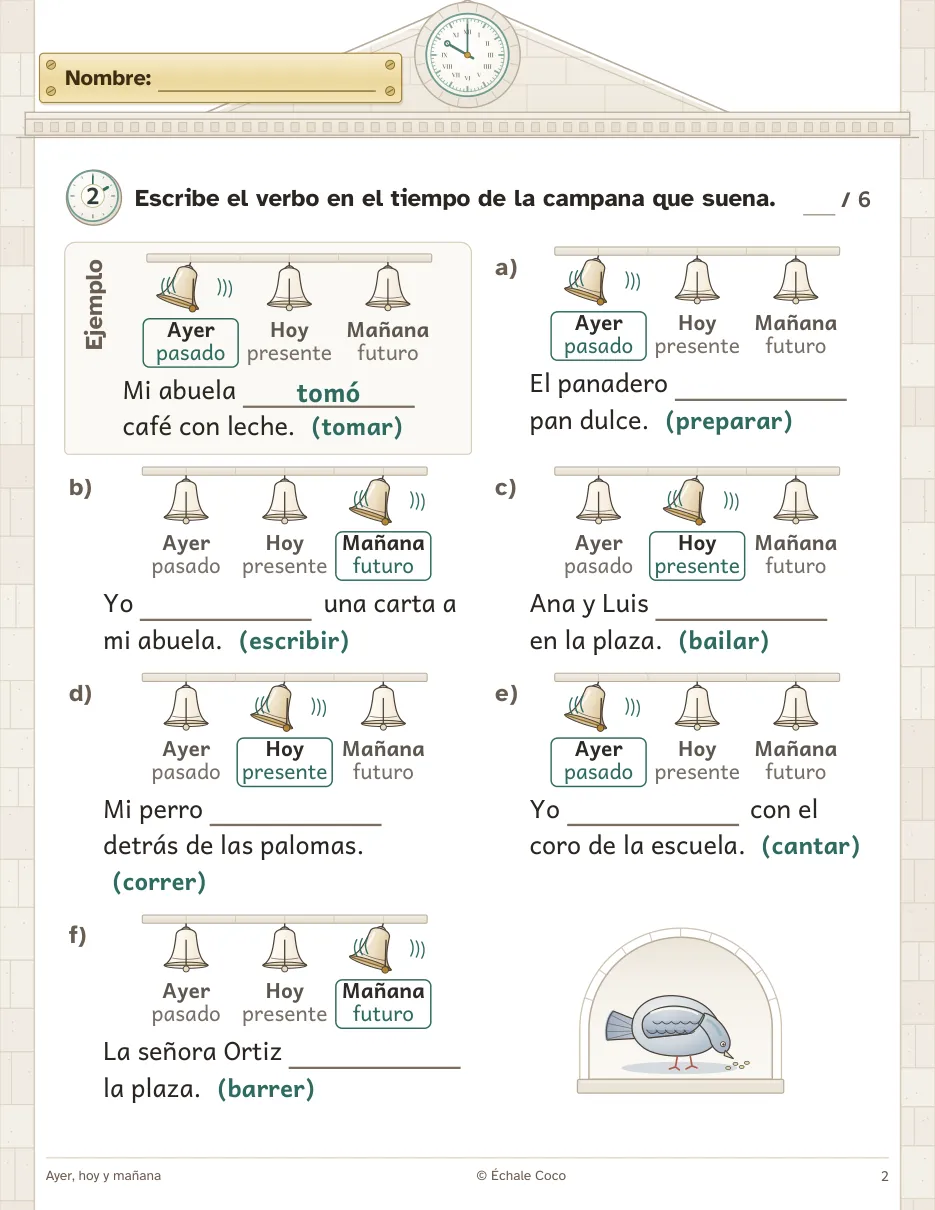
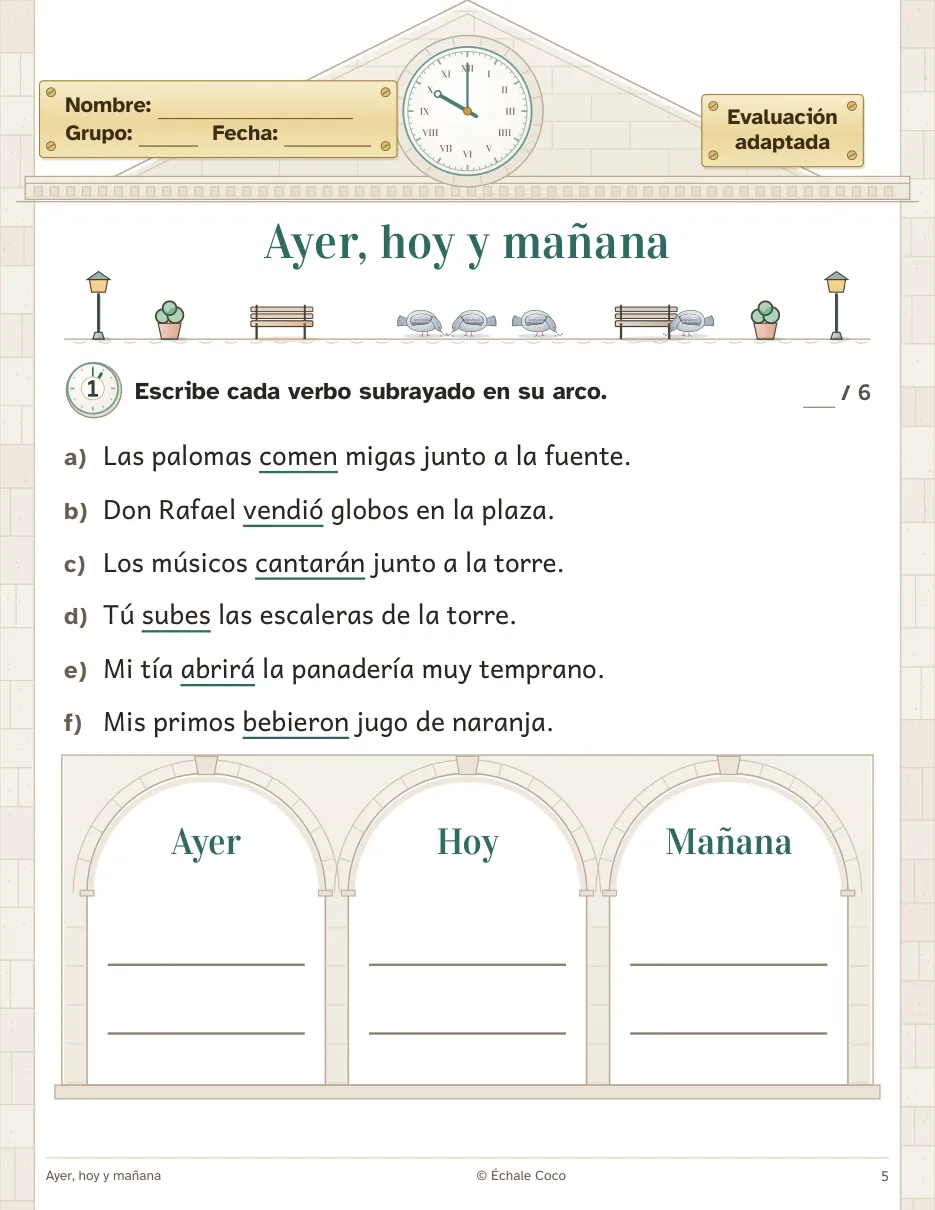
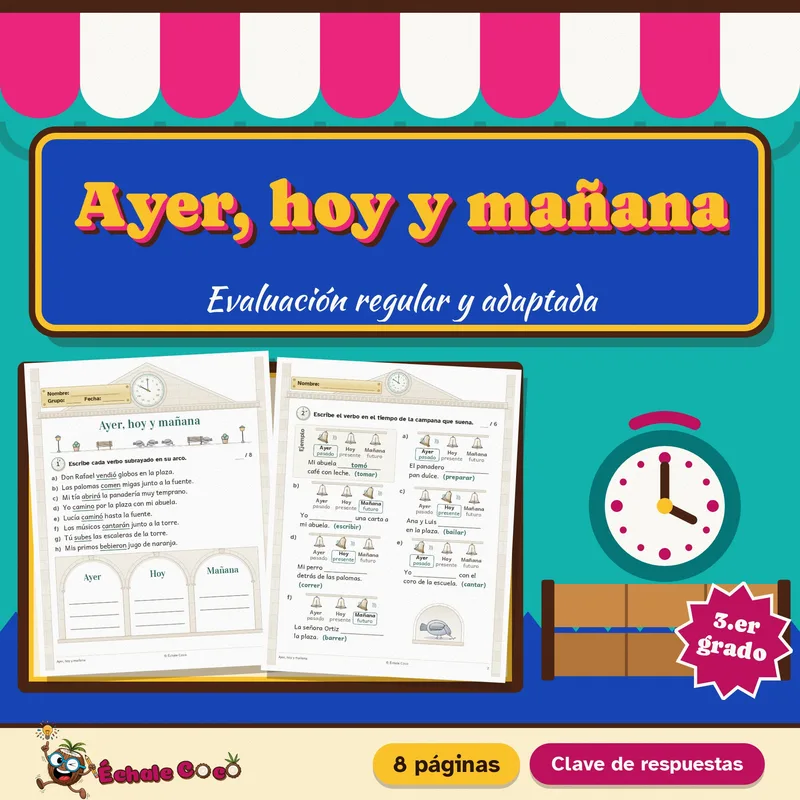
An eight-page assessment on the three simple tenses of regular verbs: the regular version has six questions on four pages (34 points) and the modified version has four questions on two pages (15 points). Students never see the words preterite or future, only ayer, hoy and mañana. First they copy underlined verbs into three stone arches by moment, telling apart pairs like camino and caminó. Next they see the three bells of the tower with the direction "Escribe el verbo en el tiempo de la campana que suena". Only one bell rings, Ayer, Hoy or Mañana, and students conjugate the verb given in parentheses. Then they complete sentences with clues like la semana pasada or el próximo sábado, rewrite sentences in another tense, fix verbs in the wrong tense and finish with three sentences of their own about the town square. The answer key covers both versions and a four-level rubric, and the teacher page explains what each question measures. Use it as an end-of-unit assessment on verbs or as a pre-test before you teach the future tense, and the modified version works well for students who need fewer items. Aligned to Common Core en Español.
PDF file to download and print.
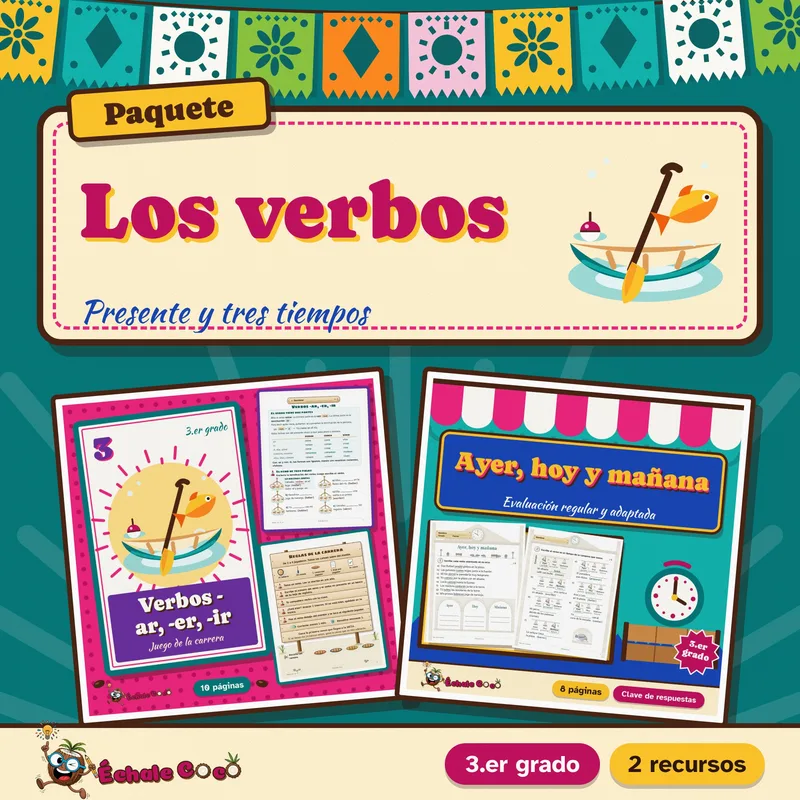
Complete the bundle
Spanish Verbs Bundle
This resource is part of a bundle. With the whole bundle you save $1.40.
The bundle also includes:
$5.60 instead of $7.00
See the bundle
What is included
- A 8-page PDF, ready to print.
- All the material is in Spanish.
- The answer key.
- Teacher notes.
- Aligned to L.3.1.e.
- Downloads as a PDF file.
Standards
- L.3.1.e Common Core en Español
Forman y usan los tiempos simples de los verbos (ejemplo: Yo caminé; Yo camino; Yo caminaré) y reconocen el uso de verbos en el modo subjuntivo (mandatos, expresión de posibilidad). - 128.5(b)(11)(D)(ii) TEKS — Spanish Language Arts and Reading
verb tense such as simple past, present, and future and imperfect past, past participle, perfect, and conditional, including the difference between ser and estar;
The official text of each standard appears exactly as published.
Preview