
Inicio › Paquetes › Suma y resta hasta 20
Suma y resta hasta 20: Bilingüe · Español e inglés
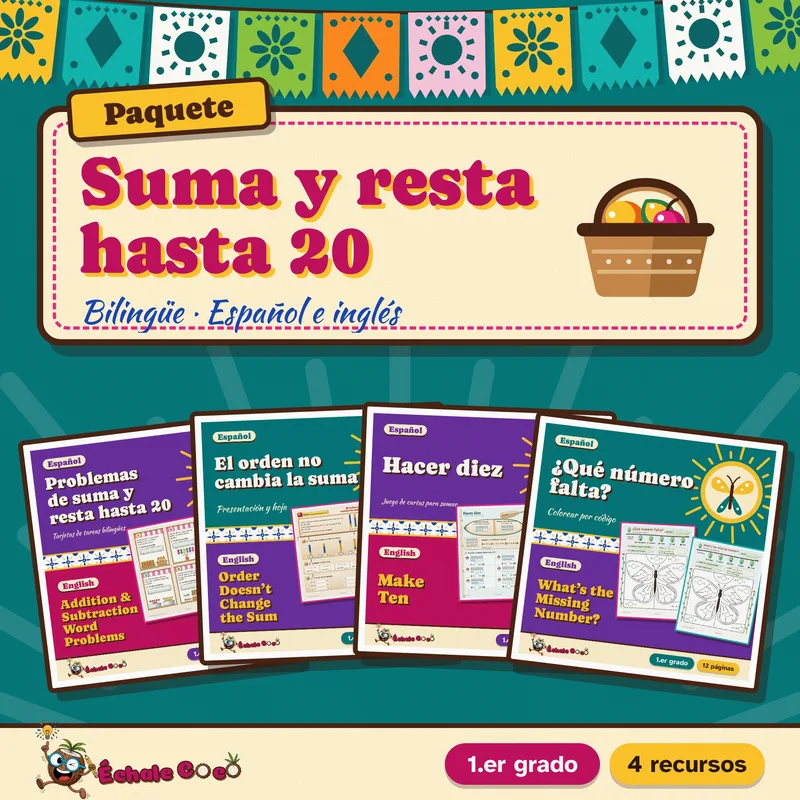
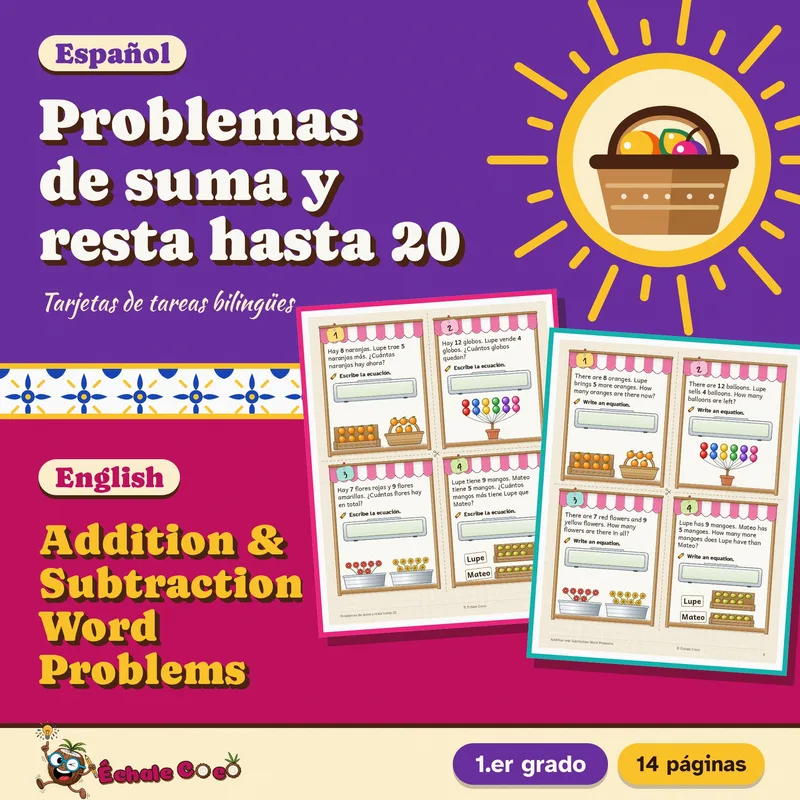
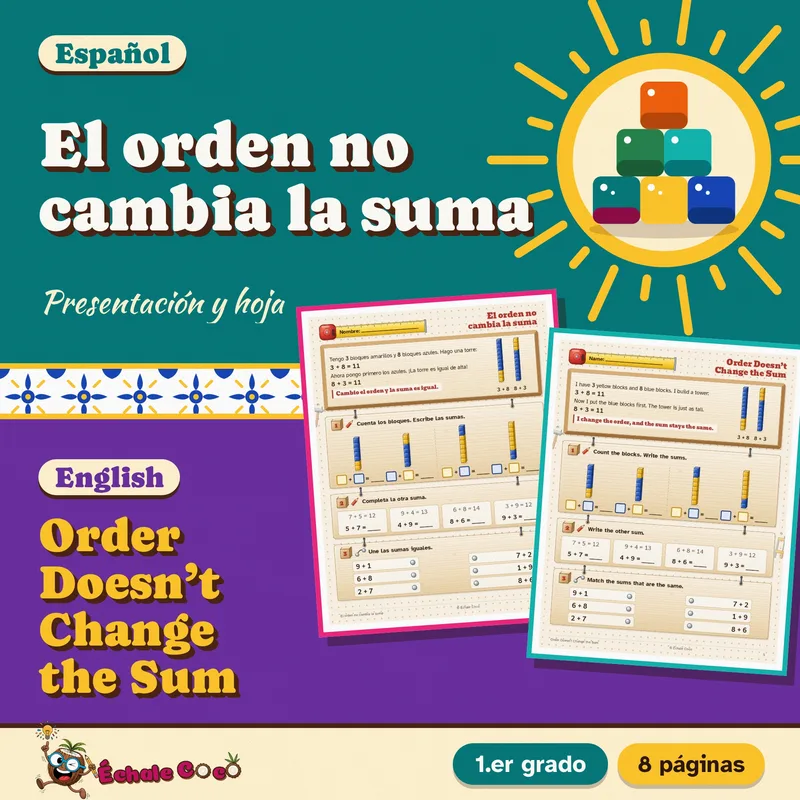
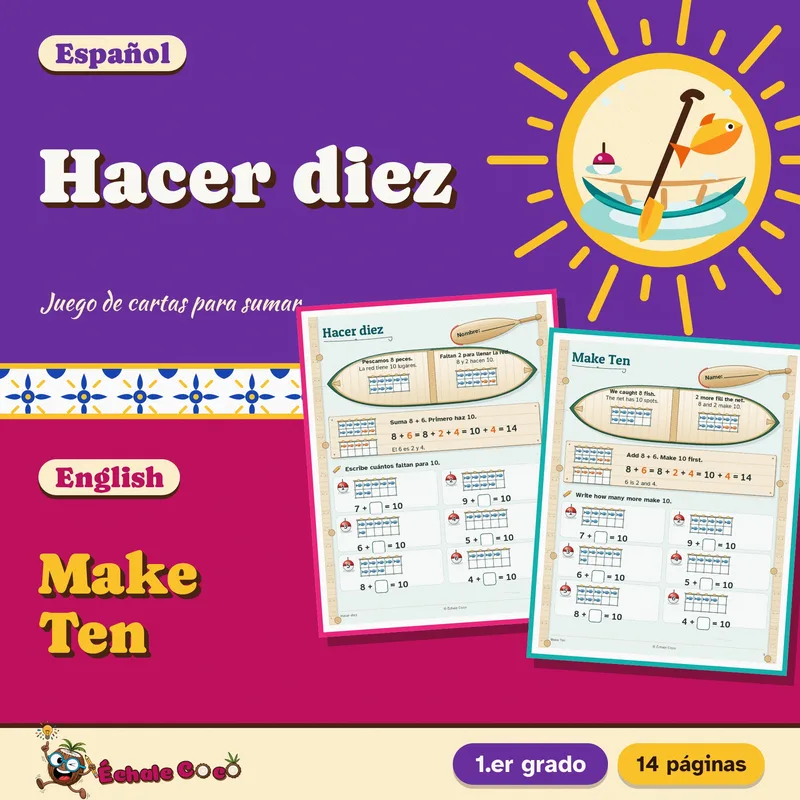
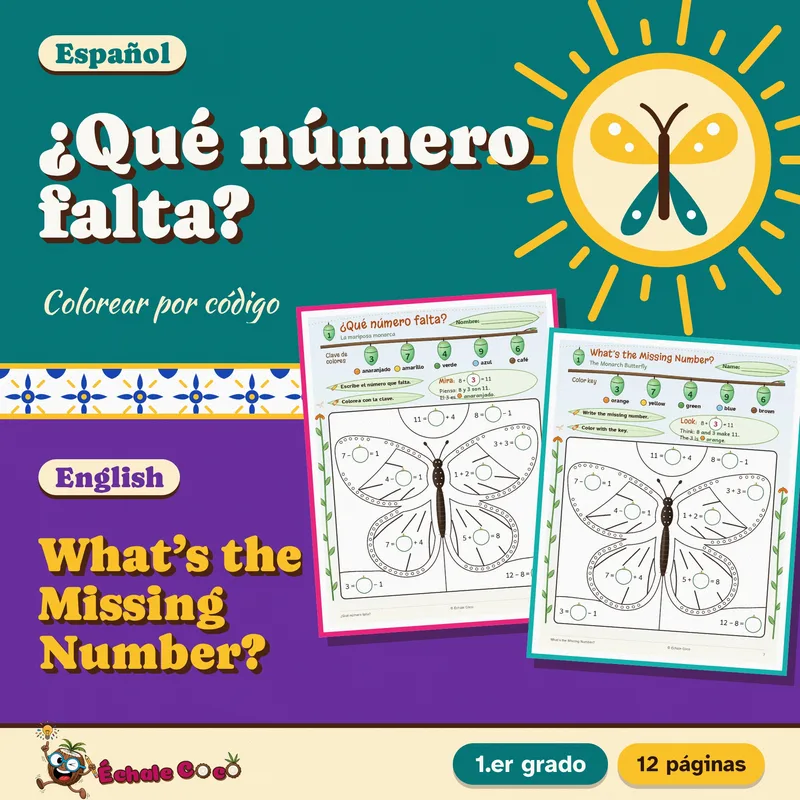
Este paquete de 1.er grado reúne cuatro recursos de matemáticas para sumar y restar hasta 20, cada uno en español y con la versión completa en inglés en páginas aparte. La lección «El orden no cambia la suma» trae una presentación de 15 diapositivas y una hoja de dos páginas, en un taller de juguetes de madera. El juego de cartas «Hacer diez» practica la estrategia de completar diez con una minilección, reglas ilustradas y 36 cartas de peces. Las 16 tarjetas de tareas son problemas escritos de suma y resta, ideales para un centro de matemáticas. Los cuatro dibujos para colorear por código tienen 48 igualdades con un número que falta, como «8 = 12 − □». Juntos van de la estrategia a la práctica y a los problemas, y sirven igual en un salón de inmersión dual o bilingüe. Cada recurso trae su clave de respuestas.
Alineado con Common Core 1.OA.A.1, 1.OA.B.3, 1.OA.C.6 y 1.OA.D.8.
Por separado: $17.00 · Ahorras $3.40
Recibes todos los archivos de una vez, listos para descargar e imprimir.
Este paquete trae 4 recursos
Estándares
- 1.OA.A.1 Use addition and subtraction within 20 to solve word problems involving situations of adding to, taking from, putting together, taking apart, and comparing, with unknowns in all positions, e.g., by using objects, drawings, and equations with a symbol for the unknown number to represent the problem.
- 1.OA.B.3 Apply properties of operations as strategies to add and subtract.3 Examples: If 8 + 3 = 11 is known, then 3 + 8 = 11 is also known. (Commutative property of addition.) To add 2 + 6 + 4, the second two numbers can be added to make a ten, so 2 + 6 + 4 = 2 + 10 = 12. (Associative property of addition.)
- 1.OA.C.6 Add and subtract within 20, demonstrating fluency for addition and subtraction within 10. Use strategies such as counting on; making ten (e.g., 8 + 6 = 8 + 2 + 4 = 10 + 4 = 14); decomposing a number leading to a ten (e.g., 13 – 4 = 13 – 3 – 1 = 10 – 1 = 9); using the relationship between addition and subtraction (e.g., knowing that 8 + 4 = 12, one knows 12 – 8 = 4); and creating equivalent but easier or known sums (e.g., adding 6 + 7 by creating the known equivalent 6 + 6 + 1 = 12 + 1 = 13).
- 1.OA.D.8 Determine the unknown whole number in an addition or subtraction equation relating three whole numbers. For example, determine the unknown number that makes the equation true in each of the equations 8 + ? = 11, 5 = � – 3, 6 + 6 = �.